Vision System Overview
IPRISM VISION SYSTEM
The IPRISM Vision System delivers objective, accurate quality inspection for high-volume production, unmanned automation, and smart factories.
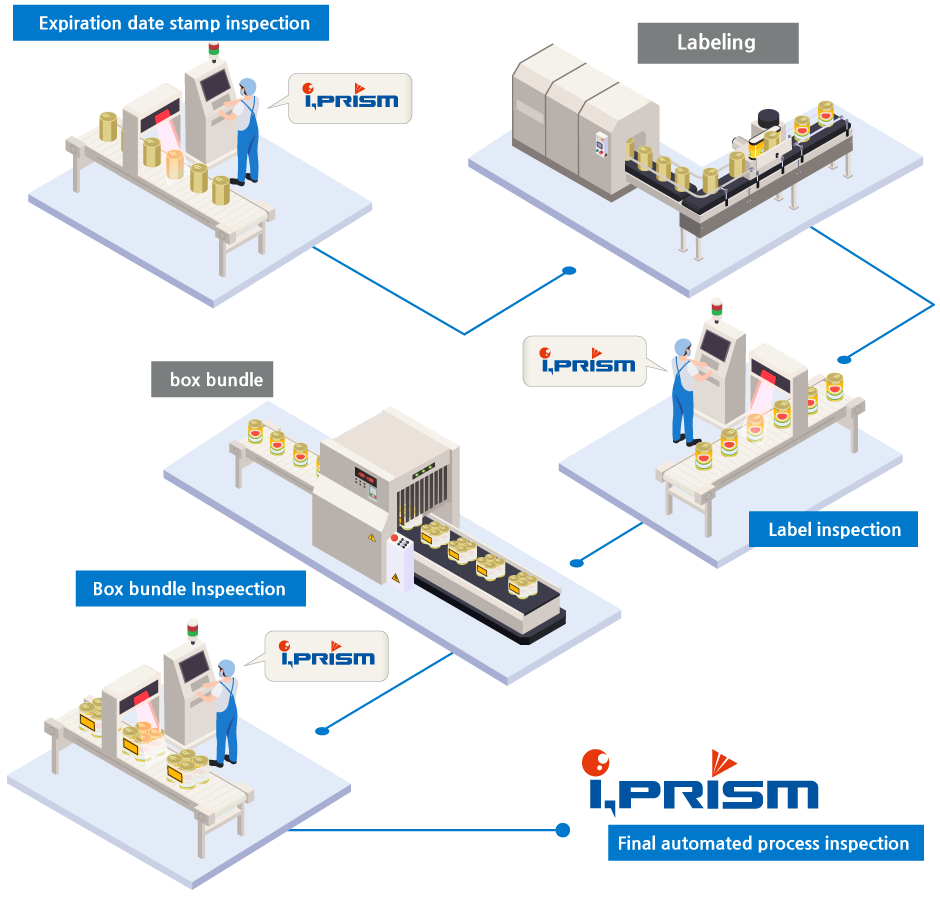
It can be introduced at every stage of manufacturing, from raw materials to finished products.
By inspecting the entire automated process, the IPRISM Vision System helps manufacturers build rigorous and consistent quality control.
Manual inspection standards can vary by operator, and physical limitations make consistent high-volume inspection difficult.
The IPRISM Vision System can evaluate a product in as little as 0.3 seconds while applying the same defect criteria every time.
It improves inspection accuracy, reduces exposure to high-risk processes, and contributes to a safer working environment.
The result is higher productivity, better quality, lower operating costs, and stronger manufacturing competitiveness.
Inspection Types
 Vision InspectionDate Code Inspection
Food expiration date,
Learn more
OCR/OCV, barcode inspection Vision InspectionPackaging defect inspection
Beverage Capping Inspection,
Learn more
Different types and defective product packaging Vision InspectionForeign matter inspection
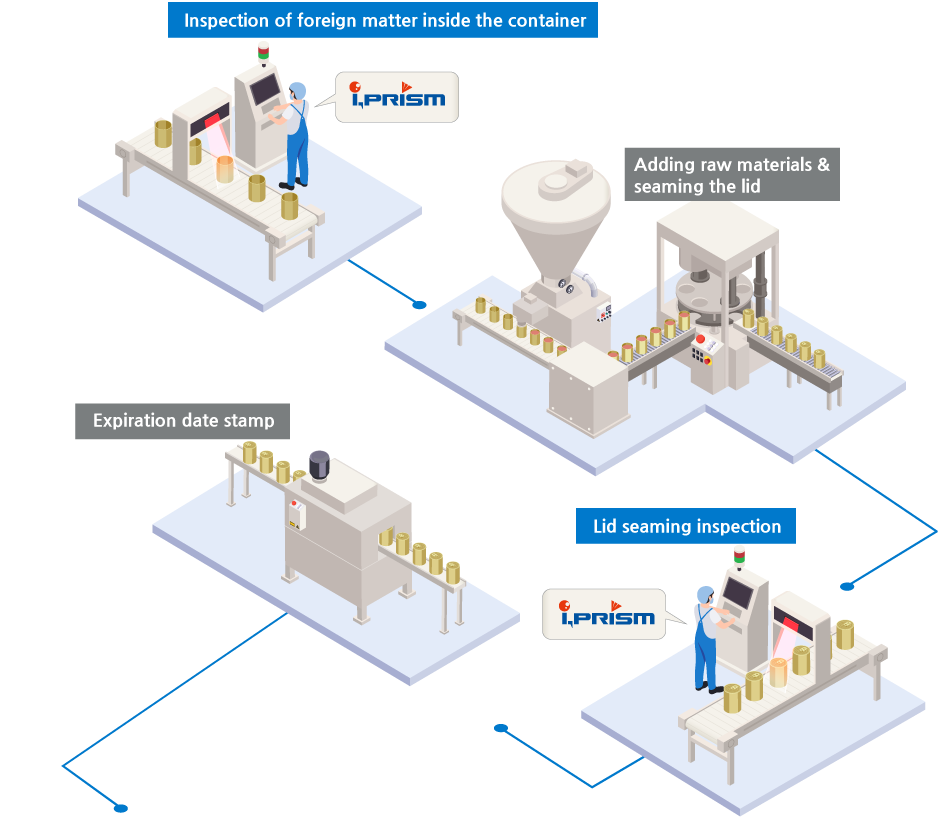
Inspection of foreign matter inside the container
Learn more
Foreign material inspection on product appearance Vision InspectionLabel inspection
Presence of product label,
Learn more
Inspection for dent defects Vision InspectionMissing inspection
Inspection of cup noodle soup,
Learn more
Inspection of quantity in snack box
Improving Production with the IPRISM Vision System
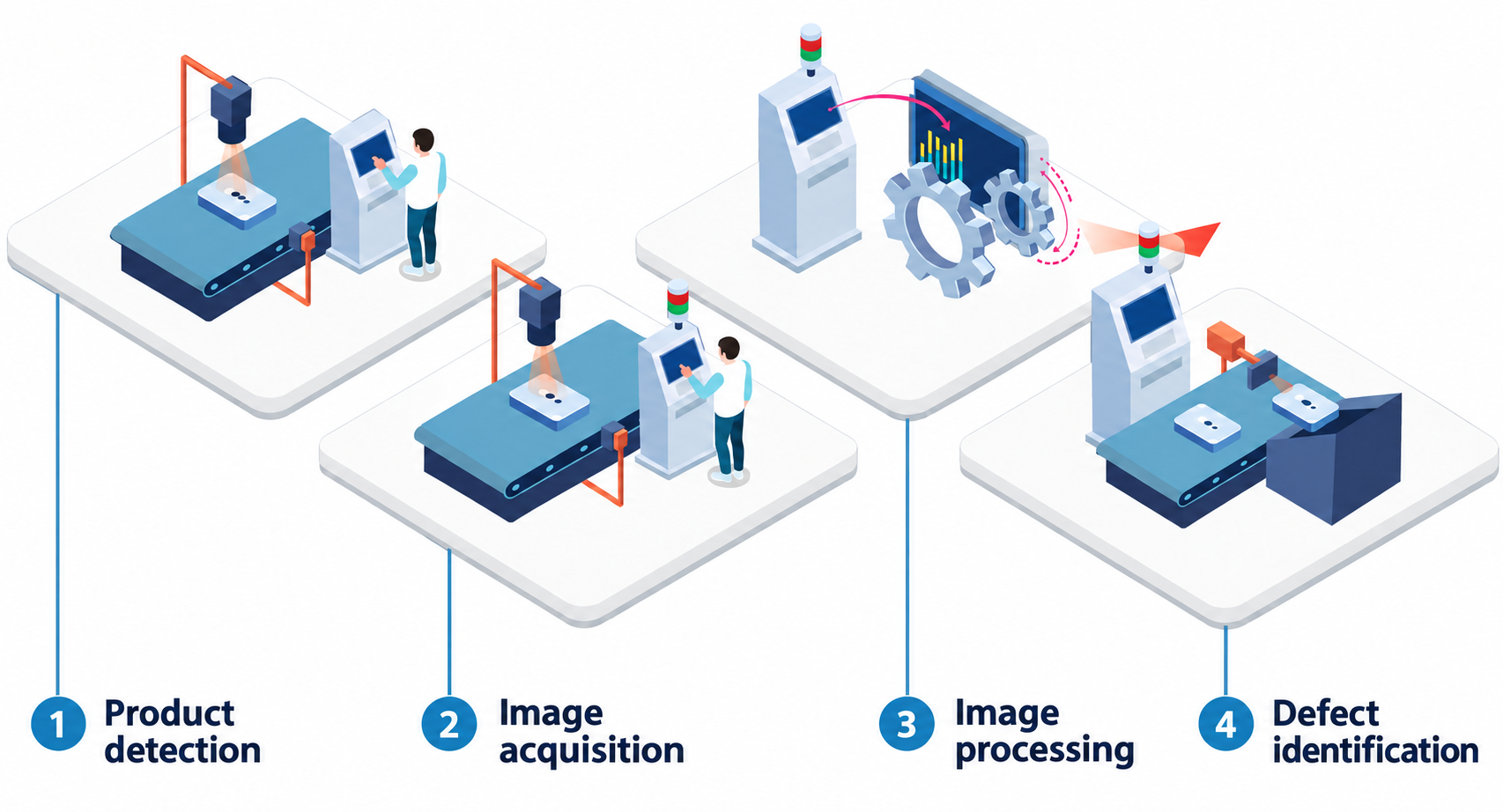
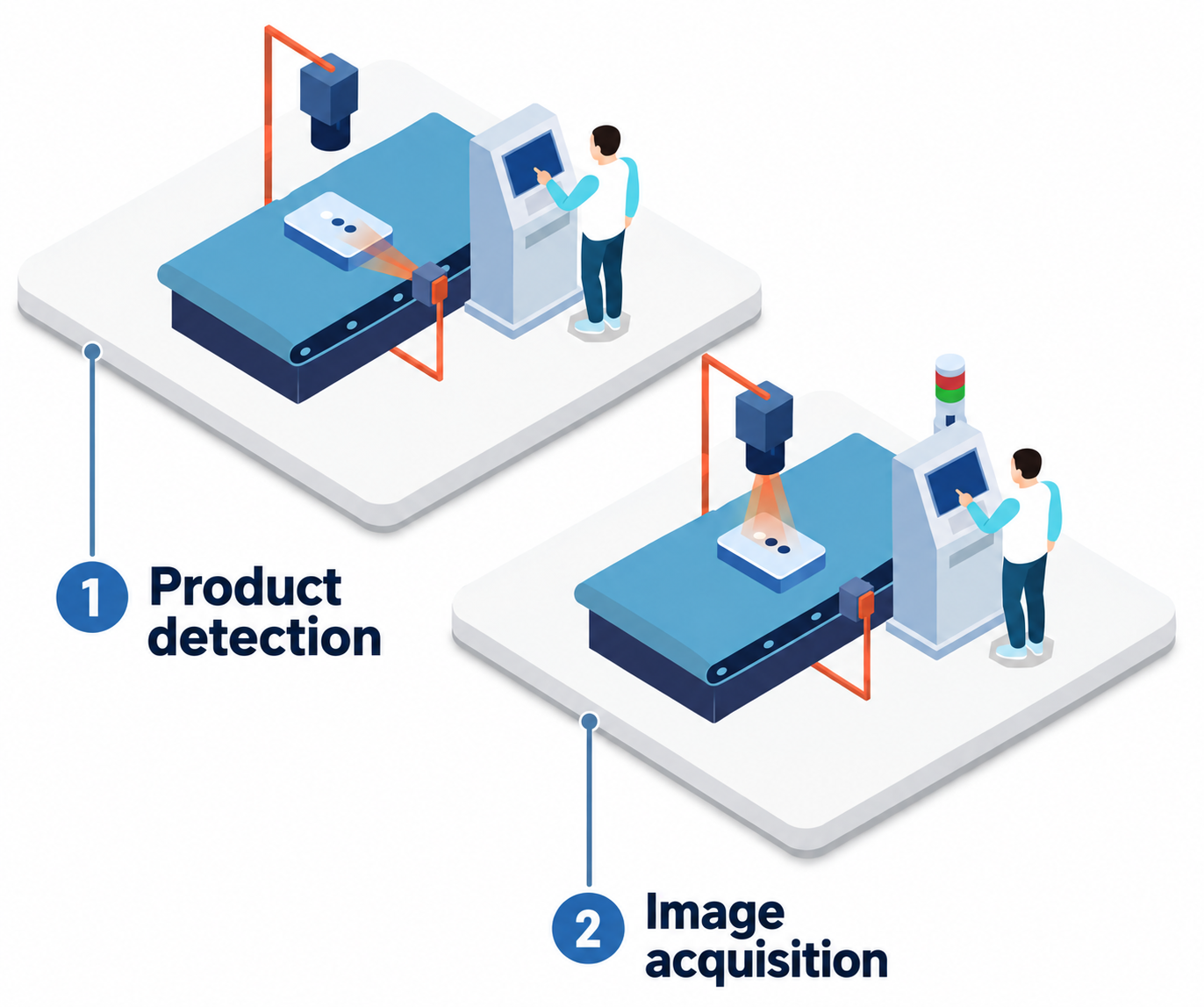
A proximity sensor detects each product on the processing line, and the camera captures its shape, dimensions, characters, patterns, and other visual features.
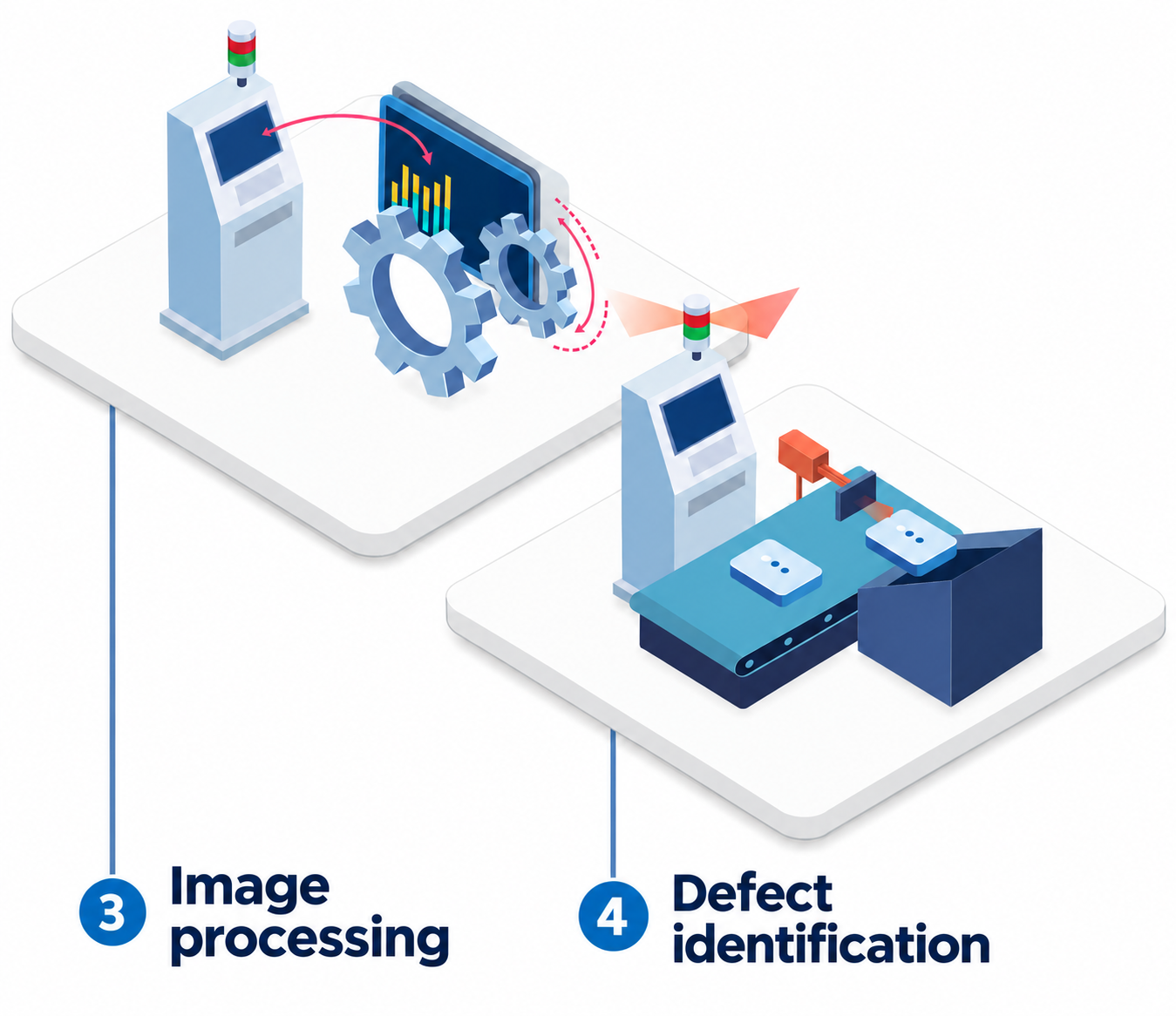
IPRISM's proprietary software analyzes the image and detects defects that do not meet the standards defined for the manufacturing process.
A green light (pass) or red light (fail) provides real-time status, while defective products are rejected without stopping the line.
The system also creates inspection records automatically. By collecting and analyzing this quality data, manufacturers can identify relationships between production conditions and recurring problems, find the causes of unexpected failures or defects, and resolve them more efficiently.